Marketing validation

AI Content for Overseas Brands 2026: Why a Native Check Beats Unchecked Localisation in Southeast Asia

Simulated shoppers in Southeast Asia and Asia-Pacific reward AI-localised promos and festive artwork only after a native or community check. Overseas brands should let the agent draft, then hold every local-language or heritage asset until someone from that market has signed it off.

Last updated
Statistics
70
By
Preferences AI
Evidence mix:Secondary source5PAI simulation · directional65
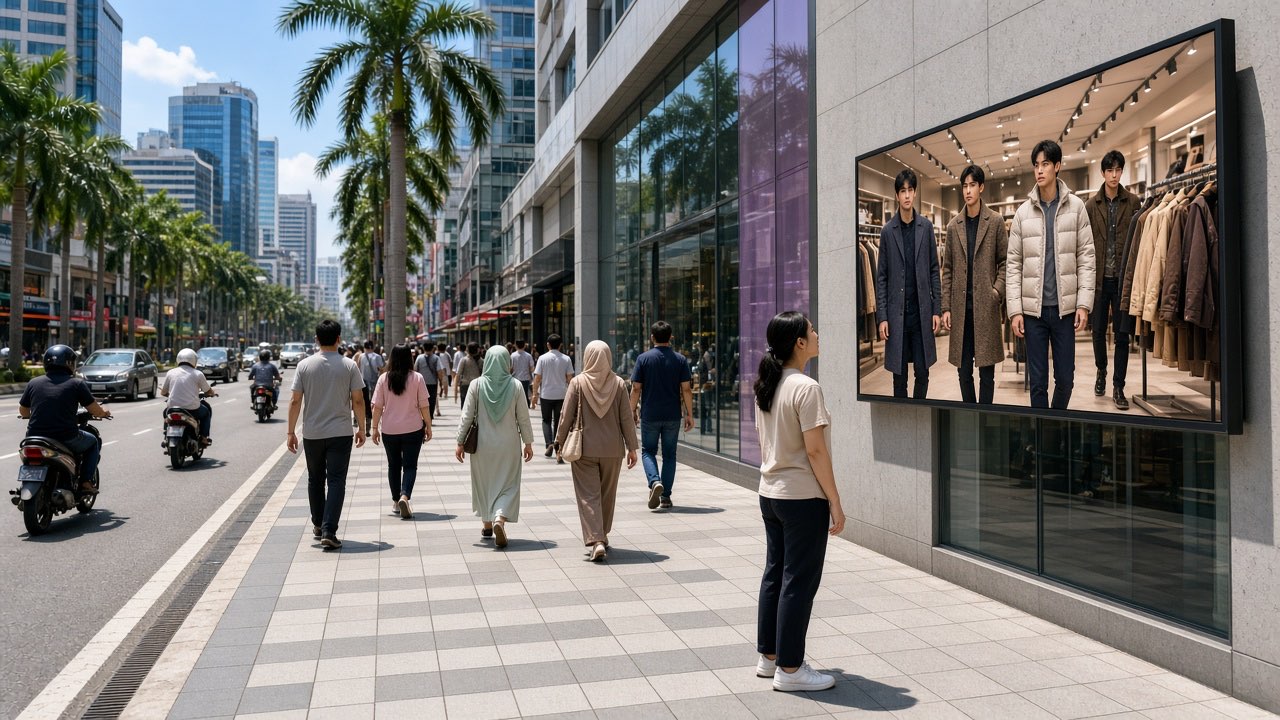
On a sunlit Kuala Lumpur pavement, shoppers including women in hijab pass a wall-mounted screen advertising heavy long-sleeve jackets, while motorbikes stay on the road beyond the kerb.

Key takeaways

  • AI-localised promo copy checked by a native speaker led simulated persuasiveness at 4.05 out of 5 and took 95.2% of picks. Unchecked AI was no clearer than English.
  • 67.5% of simulated respondents chose that checked promo for the next sale, and 68.1% as the six-month default. 99.2% expected a human to read AI-written local-language promos before they send.
  • Festive AI artwork checked by faith and community advisors led simulated purchase intent at 3.84 out of 5. Marketing-team sign-off alone scored 1.97.
  • 64.7% chose the advisor check as the six-month default for heritage packs. A shopper panel scores highest on credibility (4.36 out of 5) only if it stays fast.
  • After a wrong sacred symbol, simulated trust in the brand averaged 2.03 out of 5. 94.7% would forgive a small local seller more easily than a big brand.

Figures marked PAI simulation · directional are simulation outputs, not census or survey estimates. How we label data.

Why do overseas brands need a native check on AI content in Southeast Asia?

Unchecked local AI is already reaching the public, and shoppers treat a big brand more harshly than a small one.

In July 2026 a Malaysian cinema pulled a pre-show safety advertisement after viewers found garbled AI-generated Malay, including phrases that did not form real words. The same month, a Singapore community club removed an AI-generated National Day banner after residents spotted flags that looked like Indonesia's and other distorted graphics. In September, MAMEE recalled a Selangor-themed bag because AI artwork of Lord Murugan at Batu Caves showed a trident instead of the vel. The chief executive, chief operating officer and chief marketing officer apologised in person to Malaysia Hindu Sangam.

Marketing-Interactive, citing DoubleVerify's 2026 Asia-Pacific media-quality report, said 41% of Southeast Asian consumers would view a brand negatively if it used AI to create ads that looked low quality, uncanny or unnatural. In Singapore that share was 47%.

An overseas brand shipping into these markets is not a community volunteer. In a simulated survey of packaged-goods shoppers, 94.7% said they would forgive a small local business or community volunteers more easily than a big brand after a sacred-symbol error.

So what: Let the agent draft Malay, Bahasa Indonesia, Thai, Vietnamese, Filipino, Chinese, or a festive visual. Do not let it send or print until someone from that market has checked the asset.

25 Jul 2026report

Secondary source

On 25 July 2026, Sinar Daily reported that a Malaysian cinema withdrew a pre-show safety advertisement produced by the Fire and Rescue Department after viewers found garbled AI-generated Malay text that did not form coherent words.

Source: Sinar Daily, 25 July 2026
22 Jul 2026report

Secondary source

On 22 July 2026, Channel NewsAsia reported that a Singapore community club removed an AI-generated National Day banner after errors including flags that resembled Indonesia's, and said AI output should be checked before it is used.

Source: Channel NewsAsia, 22 July 2026

21 Sep 2026report

Secondary source

On 21 September 2026, Marketing-Interactive reported that MAMEE recalled a Selangor-themed bag after AI artwork of Lord Murugan showed a trident instead of the vel, and that its chief executive, chief operating officer and chief marketing officer apologised in person to Malaysia Hindu Sangam.

Source: Marketing-Interactive, 21 September 2026

41%

Secondary source

Marketing-Interactive, citing DoubleVerify's 2026 Asia-Pacific media-quality report on 6 August 2026, said 41% of Southeast Asian consumers would view a brand negatively if it used AI to create ads that looked low quality, uncanny or unnatural.

Note on simulated figures: Directional output from a Preferences AI Digital Population, not a survey of real shoppers. Indonesia is 67.4% of the product test and Malaysia is 4.2%. The Philippines is absent. Not a sales or recall forecast. Methodology

What messaging policy do simulated shoppers reward when an AI agent localises a promo?

AI-localised copy with a same-day native-speaker check. Unchecked AI is no clearer than staying in English.

The simulated panel scored five ways of sending the same 11.11 offer. The native check covered wording, the discount, the minimum spend and the end time.

PolicyClarity (/5)Persuasiveness (/5)Tone fit (/5)Preference share
AI-localised, native-speaker check4.504.054.1795.2%
AI slang or code-mix, plus a native check3.503.142.944.8%
Human local copywriter, one to two days late3.752.933.320%
AI-localised, shipped on the agent's confidence3.092.612.620%
English only3.102.132.210%

Exhibit 1. A same-day native check takes AI-localised copy from the bottom tier to first. Preferences AI simulation, app-promo messaging test, n = 312; directional, not a survey of real shoppers.

Clarity for the winning policy sat in a tight band across the markets in the panel: 4.48 in Indonesia, 4.51 in Thailand, 4.54 in Vietnam and 4.45 in Singapore. Asked why they chose it, 55% pointed to error-free offer details and 38% to easier reading in their own language.

On the follow-up survey, 67.5% wanted the native-checked version for the next sale and 68.1% as the six-month default.

So what: For an overseas brand, the localisation budget is incomplete without the native read. The check is part of the send, not a later nice-to-have.

Note on simulated figures: Directional output from a Preferences AI Digital Population, not a survey of real shoppers. Malaysia is 0.3% of the messaging test and the Philippines is absent. Not a conversion or churn forecast. Methodology

What creative policy do simulated shoppers reward when an AI agent draws a festive or heritage pack?

AI artwork checked by advisors from each faith or community shown. A marketing-team sign-off does not count.

The simulated panel scored five policies for the same festive heritage pack.

PolicyPurchase intent (/5)Credibility (/5)Relevance (/5)Preference share
AI artwork plus a faith and community advisor check3.844.234.0062.8%
Advisor check plus a shopper-panel test3.764.363.8133.5%
Commissioned local artists, no AI, six to eight weeks3.334.053.583.8%
AI artwork with no sacred figures2.572.252.980%
AI artwork, marketing-team sign-off only1.971.552.970%

Exhibit 2. A community check takes the same AI artwork from last place to first. Preferences AI simulation, heritage-pack product test, n = 239; directional, not a survey of real shoppers.

Marketing sign-off alone had a top-two purchase-intent score of 5.0% and credibility of 1.55 out of 5. Simulated shoppers said they did not trust a pack when no one from the community had verified it. On the survey, 64.7% chose the advisor check as the six-month default, and 57.7% said it should be the check brands are required to run.

Before the runs, a further claim was tested: that adding a shopper panel would be the method to require. It did not clear that bar. The panel beat marketing sign-off, but not the advisor check, on purchase intent (3.76 versus 3.84) and on preference share (33.5% versus 62.8%). Keep it as an extra step for the riskiest packs, not as the default rule.

So what: An overseas brand's own marketing team cannot sign off a depiction of someone else's faith. The sign-off that shoppers count comes from that community.

Are English-only copy, slang, or dropping sacred figures safe fallbacks?

No. Each shortcut loses the audience it was meant to protect, except English in Singapore.

English-only was the weakest promo on persuasiveness (2.13 out of 5), tone fit (2.21), memorability (1.84) and distinctiveness (1.58), with no preference share. Singapore is the exception: English clarity there was 3.87 out of 5, against 2.82 to 2.98 in Indonesia, Thailand and Vietnam. Only 7.8% chose English for the next sale and 10.1% as the six-month default.

A slang or code-mixed rewrite, even after a native check, is easier to remember as distinctive (top-two distinctiveness 38.8%, against 30.8% for standard checked copy) and weaker on clarity (3.50 versus 4.50) and persuasiveness (3.14 versus 4.05). In the survey, 45.9% said slang made them less likely to tap, and 63.6% said brand slang and emojis feel try-hard. Openness sits with bilingual shoppers. Among people who mostly receive local-language promos, 3.7% picked slang next.

Stripping sacred figures from a festive pack also failed. Purchase intent was 2.57 out of 5, credibility 2.25, and preference share 0%. Simulated shoppers described it as caution rather than respect. Only 3.9% chose it for the next pack, even though 48.7% agree that brands should keep religious figures off snack packaging unless the depiction is right.

So what: Do not decline the agent's localisation and hide in English, outside English-first markets. Do not apply slang as a blanket "improvement". Do not delete the sacred image and call that respect.

What should the native check include, and how fast must it be?

A human from the market is the minimum. A shopper check is for cultural risk, and it has to fit the campaign clock.

For AI-written local-language promos, 54.9% of simulated respondents wanted a native-speaker read plus a small shopper or panel test first, and 44.3% wanted the native read only. Together, 99.2% expected a human read. Almost no one accepted English-only or no check.

The error most likely to make people ignore promos or turn notifications off is a culturally off reference (77.6%), ahead of garbled words (11.5%) and a wrong price (9.8%). A proof-read catches broken words and a wrong end date. It can miss a line that lands badly in one market. After garbled local-language copy, 69.7% rated trust in the offer at 1 or 2 out of 5 (mean 2.25). If the errors continued and a competitor checked its promos, 55.7% said they would switch most of their shopping and 30.5% would use the app less.

For festive packs, the shopper panel is the credibility leader (4.36 out of 5) and took 50.4% of "what I want to buy next" votes. It is not the rule most people would impose: 57.7% said the required check is the advisor review, against 38.1% for advisors plus a panel. Timing is why. 47.1% would rather a pack miss the festive season than be wrong. 40.9% would accept up to a week's delay. Only 8.4% accept two to four weeks, which is what the panel arm cost in this test.

After a wrong sacred object, 75.6% rated trust in the brand at 1 or 2 out of 5 (mean 2.03). The most damaging mistake was a wrong sacred object on a deity (56.9%). After a recall and an in-person apology, 42.9% would wait to see a new review process and 26.6% would keep buying as before.

So what: Write cultural fit into the check, not only spelling. Use a shopper panel for deities, places of worship, national symbols and mass packs, and design it to finish in about a week. Publish the review process. A label is not a substitute: 48.7% want AI promo copy labelled only when no human checked it.

What should overseas brands do before AI content ships in Southeast Asia?

Let the agent draft. Hold the asset until a native or community check clears it.

  1. Do not let the agent send or print. Local-language promos and festive or heritage artwork stay in draft until the check below is done.
  2. For promo copy, require a same-day native-speaker read of wording, discount, minimum spend and end time. That was the policy simulated shoppers put first on every core measure.
  3. For sacred and cultural creative, require advisors from that faith or community. Marketing-team approval was the weakest pack tested. Fix what the advisors flag before print.
  4. Add a shopper check when the cultural risk is high, and keep it inside about a week. Use it for festive, national or faith-loaded campaigns, and for deities, places of worship, flags and mass-distributed packs.
  5. Default to natural standard wording. Test slang only with bilingual or code-mixed audiences, and judge it on clarity and persuasion, not only on recall.
  6. Do not hide in English outside markets where the audience already shops in English. Singapore was the only market in the promo test where English clarity held up.
  7. Do not remove sacred figures to play safe. If the brief celebrates a community, depict it correctly. Keep sacred figures off throwaway packaging unless advisors approve that use.
  8. Publish the review process. After an error, simulated shoppers were more willing to wait for a new process than to treat an apology as enough. A large overseas brand should expect less forgiveness than a small local seller.

More statistics

StatisticValueSource

Marketing-Interactive, citing DoubleVerify on 6 August 2026, said 47% of Singapore consumers would view a brand negatively if its AI-generated advertising looked low quality.

Secondary source
47%Source: Marketing-Interactive (citing DoubleVerify), 6 August 2026

In a simulated messaging test, AI-localised promo copy shipped without a native check scored 2.61 out of 5 on persuasiveness.

2.61/ 5Source: Preferences AI simulation: app-promo messaging test, 5 October 2026

In a simulated messaging test, English-only promo copy scored 3.10 out of 5 on clarity.

3.10/ 5Source: Preferences AI simulation: app-promo messaging test, 5 October 2026

In a simulated messaging test, English-only promo copy scored 1.84 out of 5 on memorability.

1.84/ 5Source: Preferences AI simulation: app-promo messaging test, 5 October 2026

In a simulated messaging test, a slang or code-mixed rewrite checked by a native speaker scored 3.50 out of 5 on clarity, one point below standard checked copy.

3.50/ 5Source: Preferences AI simulation: app-promo messaging test, 5 October 2026

In a simulated messaging test, 38.8% of the panel gave a slang or code-mixed rewrite a top-two distinctiveness score, against 30.8% for standard native-checked copy.

38.8%Source: Preferences AI simulation: app-promo messaging test, 5 October 2026

In a simulated messaging test, human-written local copy that arrived one to two days late scored 3.75 out of 5 on clarity.

3.75/ 5Source: Preferences AI simulation: app-promo messaging test, 5 October 2026

In a simulated messaging test, human-written local copy that arrived one to two days late scored 2.93 out of 5 on persuasiveness.

2.93/ 5Source: Preferences AI simulation: app-promo messaging test, 5 October 2026

In a simulated survey, 13.2% of respondents chose a slang or code-mixed promo for the next sale.

13.2%Source: Preferences AI simulation: app-promo survey, 5 October 2026

In a simulated survey, 10.1% of respondents chose English-only as the six-month default for promo copy.

10.1%Source: Preferences AI simulation: app-promo survey, 5 October 2026

In a simulated survey, mean trust in an offer after a promo used garbled local-language words was 2.25 out of 5.

2.25/ 5Source: Preferences AI simulation: app-promo survey, 5 October 2026

In a simulated survey, 11.5% of respondents said garbled words are the promo mistake most likely to make them ignore messages.

11.5%Source: Preferences AI simulation: app-promo survey, 5 October 2026

In a simulated survey, 9.8% of respondents said a wrong price is the promo mistake most likely to make them ignore messages.

9.8%Source: Preferences AI simulation: app-promo survey, 5 October 2026

In a simulated survey, 3.7% of respondents who mostly receive local-language promos chose a slang rewrite for the next sale.

3.7%Source: Preferences AI simulation: app-promo survey, 5 October 2026

In a simulated survey, 30.5% of respondents said they would use an app less if unchecked AI promo errors kept coming while a competitor checked its copy.

30.5%Source: Preferences AI simulation: app-promo survey, 5 October 2026

In a simulated product test, 70.9% of the panel gave advisor-checked festive AI artwork a top-two purchase-intent score (4 or 5 out of 5).

70.9%Source: Preferences AI simulation: heritage-pack product test, 6 October 2026

In a simulated product test, adding a shopper-panel test to an advisor check scored 3.76 out of 5 on purchase intent, below the advisor check alone.

3.76/ 5Source: Preferences AI simulation: heritage-pack product test, 6 October 2026

In a simulated product test, 5.0% of the panel gave marketing-only sign-off a top-two purchase-intent score (4 or 5 out of 5).

5.0%Source: Preferences AI simulation: heritage-pack product test, 6 October 2026

In a simulated product test, festive artwork commissioned from local artists with no AI, on a six-to-eight-week timeline, scored 3.33 out of 5 on purchase intent.

3.33/ 5Source: Preferences AI simulation: heritage-pack product test, 6 October 2026

In a simulated survey, 26.1% of respondents chose an advisor check plus a shopper panel as the six-month default for festive AI artwork.

26.1%Source: Preferences AI simulation: heritage-pack survey, 6 October 2026

In a simulated survey, 38.1% of respondents said brands should be required to add a shopper-panel test on top of a faith and community advisor check.

38.1%Source: Preferences AI simulation: heritage-pack survey, 6 October 2026

In a simulated survey, 31.4% of respondents said the pack they most want to buy next is AI artwork checked by faith and community advisors, without a further shopper panel.

31.4%Source: Preferences AI simulation: heritage-pack survey, 6 October 2026

In a simulated survey, 3.9% of respondents chose festive AI artwork with no sacred figures for the next pack.

3.9%Source: Preferences AI simulation: heritage-pack survey, 6 October 2026

In a simulated survey, 48.7% of respondents agreed that brands should keep religious figures off snack packaging.

48.7%Source: Preferences AI simulation: heritage-pack survey, 6 October 2026

In a simulated survey, mean trust in a brand after an AI pack showed a sacred figure or symbol wrongly was 2.03 out of 5.

2.03/ 5Source: Preferences AI simulation: heritage-pack survey, 6 October 2026

In a simulated survey, 26.6% of respondents said they would keep buying as before after a recall and an in-person apology to community leaders.

26.6%Source: Preferences AI simulation: heritage-pack survey, 6 October 2026

In a simulated survey, 8.4% of respondents said they would accept a two-to-four-week delay so a festive pack can be checked.

8.4%Source: Preferences AI simulation: heritage-pack survey, 6 October 2026

Methodology

Simulated population frame
Synthetic adults in Southeast Asia or Asia-Pacific: app shoppers who read local-language or mixed-language promos, and packaged-goods shoppers who notice festive or heritage packaging in multicultural, multi-faith societies. The two frames were tested separately.
Synthetic respondents (n)
357
Simulation run
6 October 2026
Primary sources
Dated and linked on every statistic

Simulation samples

  • Preferences AI simulation: app-promo messaging test. Synthetic adults in Southeast Asia or Asia-Pacific who shop on e-commerce, food-delivery or ride-hailing apps at least monthly, read promo messages, and receive them in a local language or a mix of English and a local language. Simulated messaging test, n = 312.. Run 5 October 2026. View report
  • Preferences AI simulation: app-promo survey. Synthetic adults in Southeast Asia or Asia-Pacific who shop on e-commerce, food-delivery or ride-hailing apps at least monthly, read promo messages, and receive them in a local language or a mix of English and a local language. Follow-up simulated survey, n = 357.. Run 5 October 2026. View report
  • Preferences AI simulation: heritage-pack product test. Synthetic adults in Southeast Asia or Asia-Pacific who buy packaged snacks, drinks or groceries at least monthly, notice festive or heritage packaging, and live in multicultural, multi-faith societies. Simulated product test, n = 239.. Run 6 October 2026. View report
  • Preferences AI simulation: heritage-pack survey. Synthetic adults in Southeast Asia or Asia-Pacific who buy packaged snacks, drinks or groceries at least monthly, notice festive or heritage packaging, and live in multicultural, multi-faith societies. Follow-up simulated survey, n = 357.. Run 6 October 2026. View report

Two pairs of directional Preferences AI studies. They use different shopper frames, so the figures are not one blended sample.

  • App-promo messaging test (5 October 2026, n = 312). Five policies for the same 11.11 offer: English only, AI-localised and shipped on the agent's confidence, AI-localised with a same-day native-speaker check, a slang or code-mixed rewrite with a native check, and a human local copywriter one to two days late. Scores are means on a 1–5 scale, plus one forced pick. Panel: Thailand 36.2%, Indonesia 23.4%, Vietnam 21.5%, Singapore 18.6%, Malaysia 0.3%. No Hong Kong respondents. About 52.9% were coded lower relative income. Open the messaging-test report.
  • App-promo follow-up survey (5 October 2026, n = 357). Next sale, trust after garbled copy, the worst error, slang, the required check, labelling, and the six-month default. Where a question allowed more than one answer, the share is of all respondents. Open the promo survey report.
  • Heritage-pack product test (6 October 2026, n = 239). Five policies for the same festive pack: marketing-team sign-off only, a faith and community advisor check, that check plus a shopper panel, commissioned local artists with no AI, and AI artwork with no sacred figures. Panel: Indonesia 67.4%, Singapore 23.0%, Thailand 5.0%, Malaysia 4.2%, Vietnam 0.4%. No Hong Kong respondents. About 54.4% were coded lower relative income. Open the product-test report.
  • Heritage-pack follow-up survey (6 October 2026, n = 357). Next pack, trust after a sacred-symbol error, the required check, acceptable delay, and response to a recall and apology. Open the heritage survey report.

The opening news figures are from Sinar Daily (25 July 2026), Channel NewsAsia (22 July 2026), and Marketing-Interactive (6 August 2026, citing DoubleVerify, and 21 September 2026 on the MAMEE recall). They are not Preferences AI results.

Policies were described to the panel. They were not shown as finished copy in each language, or as finished artwork.

Limitations

Directional simulation evidence from synthetic panels, not surveys of real shoppers, and not a forecast of conversion, churn, sales or recalls. The two studies use different frames and dates. Do not add their samples together. Malaysia, where the cinema-ad and MAMEE cases were reported, is barely in the promo test (0.3%) and is 4.2% of the heritage product test. The Philippines is absent from both. The heritage survey did not return a country mix. About a quarter of the promo survey panel receives promos in English only, and 14.6% shop less than monthly. Read the English-only result with the Singapore exception in view. A native proof-read and a community advisor check were described as policies. The test did not measure how often a real reviewer would catch a given error. The shopper-panel arm was costed at a multi-week delay inside the test. A faster panel was not tested directly. Several answers piled onto one option, including a 0% preference share for unchecked policies. Treat those as a sharp directional split, and review them for mode collapse before citing them as a market rate.

Read the full Preferences AI Research methodology →

Sources

What changed in this refresh

We refresh this page roughly monthly. The URL stays the same.

  1. First draft. Combines the 5 October promo-copy study and the 6 October heritage-pack study.

Cite this page

Preferences AI. AI Content for Overseas Brands 2026: Why a Native Check Beats Unchecked Localisation in Southeast Asia. Last updated 6 October 2026. https://preferencesai.io/research/ai-content-native-check-overseas-brands-2026-southeast-asia

Go beyond the averages

Test your own concept against this market.

Run a quick concept test on an AI Digital Population for your APAC market, or compare options from your coding agent with preferences-validate.