In a simulated product test, 82.3% preferred brand-owned style education as the channel response.
Source: Preferences AI simulation: fashion channel-response product test, 28 October 2026
In a simulated study, 82.3% of Hong Kong adults aged 18–30 preferred brand-owned style lessons when a checked jacket was meme-compared with a public-hospital gown. Silence won no preference. An unfunny brand joke was almost all downside: 98.5% said they would cringe, unfollow, or avoid the collaboration.
Figures marked PAI simulation · directional are simulation outputs, not census or survey estimates. How we label data.
The feed, not the lookbook, decided what the jacket meant.
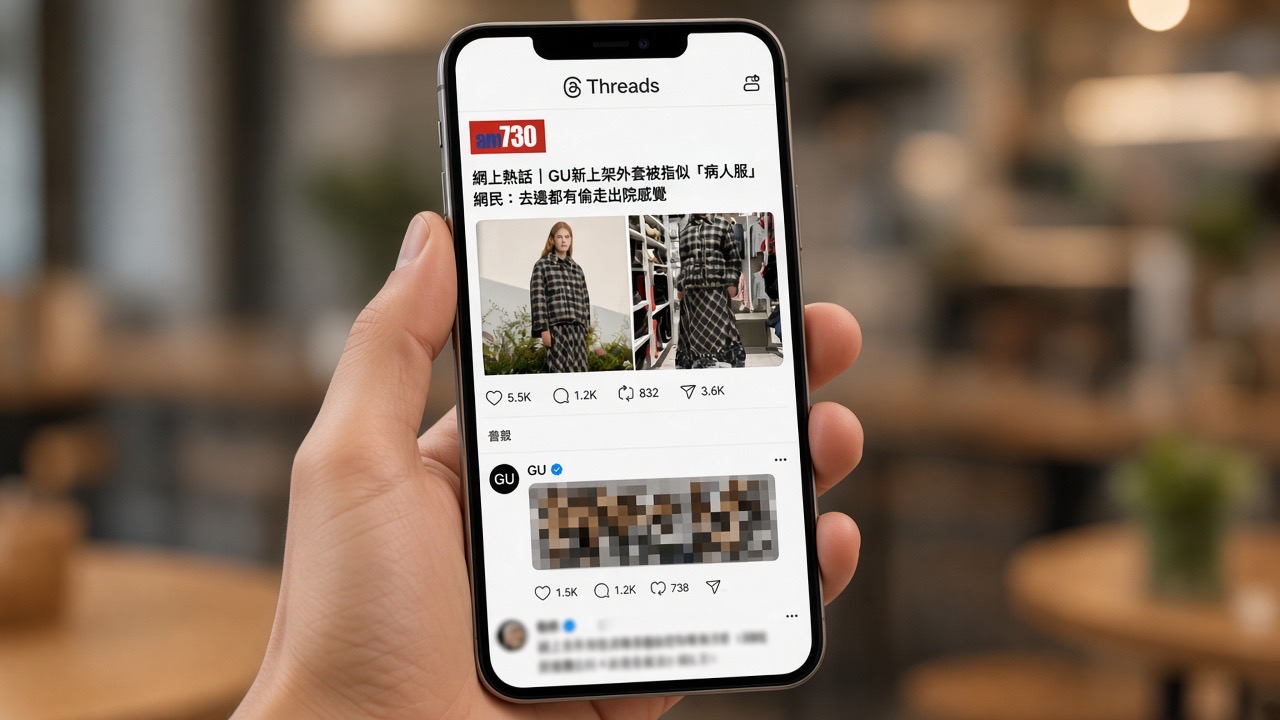
In October 2026, shoppers on Threads placed a dark checked jacket from GU’s collaboration with rokh next to the checked gowns worn in Hong Kong public hospitals. am730 reported the joke as a fake “GU × public hospital” collaboration, and the line that wearing it felt like slipping out of a ward. Bastille Post reported the same comparison under the name “hospital chic”. GOtrip and U Lifestyle amplified it. The brand’s own collaboration page stayed on the designer collection.
The jacket was not a hospital garment. The meme made it read as one. For a fashion brand, the decision is which post this week changes that read.
So what: A polished lookbook does not answer a local joke. The owned post has to.
Style education takes the choice. Silence takes none.
“Top 82% picked the style lesson.” In the simulated product test, 82.3% preferred a brand-owned styling carousel. The headline rounds that share to 82%.
“Silence won nobody.” A silent official lookbook took 0% of preference, and the lowest credibility score, 2.45 out of 5.
“A brand joke can place second. It cannot replace the lesson.” A self-aware meme reply took 17.4%. Creator-only restyles took 0%. Pulling the jacket from ads took 0.3%.
The test asked the same question five ways. Hong Kong adults aged 18–30, who shop fast fashion and see fashion memes, chose which channel response they preferred. Style education scored 3.41 out of 5 on purchase intent and 4.17 out of 5 on credibility. The lean-in reply scored 3.09 and 3.44.
| Response | Purchase intent | Credibility | Preference |
|---|---|---|---|
| Style-education carousel | 3.41 | 4.17 | 82.3% |
| Lean-in meme reply | 3.09 | 3.44 | 17.4% |
| Creator-only restyle | 2.86 | 2.85 | 0% |
| Pull the jacket from ads | 2.63 | 3.10 | 0.3% |
| Silent official lookbook | 2.57 | 2.45 | 0% |
Exhibit 1. Channel response after the hospital-gown meme. Preferences AI simulation, product test of Hong Kong adults aged 18–30; directional, not a survey of real shoppers.
Before the test, two bars were set. A lean-in reply was not worth it unless it beat silence on credibility and took at least 15% of preference. It did: credibility was 0.99 points higher, and preference was 17.4%. Style education was not worth building unless it beat the lean-in reply on purchase intent and beat pulling the ads on preference. It did: purchase intent was 0.32 points higher, and preference was 82.3% against 0.3%.
So what: Ship the styling carousel as the main post. Keep a joke only as a second line, and only after a tone check.
In a simulated product test, 82.3% preferred brand-owned style education as the channel response.
3.41/ 5
PAI simulation · directionalIn a simulated product test, brand-owned style education scored 3.41 out of 5 on purchase intent.
In a simulated product test, 56.6% rated style education 4 or 5 out of 5 on purchase intent.
4.17/ 5
PAI simulation · directionalIn a simulated product test, brand-owned style education scored 4.17 out of 5 on credibility.
In a simulated product test, 17.4% preferred a lean-in meme reply as the channel response.
3.09/ 5
PAI simulation · directionalIn a simulated product test, a lean-in meme reply scored 3.09 out of 5 on purchase intent.
3.44/ 5
PAI simulation · directionalIn a simulated product test, a lean-in meme reply scored 3.44 out of 5 on credibility.
In a simulated product test, 0% preferred a creator-only restyle as the channel response.
2.86/ 5
PAI simulation · directionalIn a simulated product test, a creator-only restyle scored 2.86 out of 5 on purchase intent.
2.85/ 5
PAI simulation · directionalIn a simulated product test, a creator-only restyle scored 2.85 out of 5 on credibility.
In a simulated product test, 0.3% preferred pulling the checked jacket from paid ads.
2.63/ 5
PAI simulation · directionalIn a simulated product test, pulling the checked jacket from paid ads scored 2.63 out of 5 on purchase intent.
3.10/ 5
PAI simulation · directionalIn a simulated product test, pulling the checked jacket from paid ads scored 3.10 out of 5 on credibility.
In a simulated product test, 0% preferred a silent official lookbook as the channel response.
2.57/ 5
PAI simulation · directionalIn a simulated product test, a silent official lookbook scored 2.57 out of 5 on purchase intent.
2.45/ 5
PAI simulation · directionalIn a simulated product test, a silent official lookbook scored 2.45 out of 5 on credibility.
Note on simulated figures: Directional output from a Preferences AI Digital Population, not a survey of real Hong Kong shoppers. Methodology
Yes for the next post. The six-month habit is more mixed.
Asked what they want to see next, 57.8% of simulated respondents chose style education and 30.8% chose a lean-in joke. Silence was 4.4%. Pulling the ads was 0.9%. A styling carousel would raise purchase interest for 91.3%, including 62.5% who said it would raise interest by a lot.
| Next post they want | Share |
|---|---|
| Style education | 57.8% |
| Lean-in meme reply | 30.8% |
| Creator-only restyle | 6.1% |
| Silence | 4.4% |
| Pull the jacket from ads | 0.9% |
Exhibit 2. Forced choice of the next post. Preferences AI simulation, follow-up survey of Hong Kong adults aged 18–30; directional, not a survey of real shoppers.
Over six months the split softens. 35.2% said they would lean into a joke whenever it is funny, against 25.3% who would lead with style education. That is a habit, not a reason to skip the carousel this week. 55.5% said consideration matters more than pure awareness. 25.3% said the reverse.
So what: Use the joke, if it survives a tone check, to show the brand noticed. Use the carousel to make the jacket buyable again.
In a simulated follow-up, 57.8% said the next post they want to see is style education.
In a simulated follow-up, 30.8% said the next post they want to see is a lean-in meme reply.
In a simulated follow-up, 6.1% said the next post they want to see is a creator-only restyle.
In a simulated follow-up, 4.4% said the next post they want to see is silence.
In a simulated follow-up, 0.9% said the next post they want to see is the jacket pulled from ads.
In a simulated follow-up, 91.3% said a style carousel would raise their purchase interest.
In a simulated follow-up, 62.5% said a style carousel would raise their purchase interest by a lot.
In a simulated follow-up, 28.8% said a style carousel would raise their purchase interest somewhat.
In a simulated follow-up, 35.2% said their six-month habit would be a lean-in joke whenever it is funny.
In a simulated follow-up, 25.3% said their six-month habit would be to lead with style education.
In a simulated follow-up, 55.5% said consideration matters more than pure awareness after a fashion meme.
In a simulated follow-up, 25.3% said pure awareness matters more than consideration after a fashion meme.
No. Silence looks out of touch, and a forced joke is almost all downside.
“Staying quiet looks out of touch.” 67.7% of simulated respondents agreed (4 or 5 out of 5).
“An unfunny brand joke is almost all downside.” 98.5% said they would cringe, unfollow, or avoid the collaboration. Only 1.2% said the brand at least tried.
The 98.5% splits into cringe (58.7%), unfollow or less trust (34.0%), and avoiding the collaboration (5.8%). Separately, 81.7% agreed that style tips beat a forced joke when the question is purchase consideration.
Mass brands do not get the same room as a small label. 75.0% said big mall and mass brands should be held to a harsher standard. Leaving paid ads running with no extra check was chosen by 0.3%.
So what: Do not post a corporate meme to look in on the joke. If the line is not funny to this audience, do not post it.
In a simulated follow-up, 67.7% agreed that silence after the meme looks out of touch (4 or 5 out of 5).
In a simulated follow-up, 98.5% said an unfunny brand joke would make them cringe, unfollow, or avoid the collaboration.
In a simulated follow-up, 58.7% said an unfunny brand joke would make them cringe.
In a simulated follow-up, 34.0% said an unfunny brand joke would make them unfollow or trust the brand less.
In a simulated follow-up, 5.8% said an unfunny brand joke would make them avoid the collaboration.
In a simulated follow-up, 1.2% said an unfunny brand joke was fine because the brand at least tried.
In a simulated follow-up, 81.7% agreed that style tips beat a forced meme joke for purchase consideration (4 or 5 out of 5).
In a simulated follow-up, 75.0% said big mall and mass brands should be held to a harsher response standard than indie labels.
In a simulated follow-up, 0.3% said paid ads for the memed jacket need no extra check before they run.
Post the styling proof first. Gate the ads. Do not answer with silence or an untested joke.
So what: These are directional results from a synthetic panel. Test the caption and the outfits with real shoppers before treating them as a campaign.
In a simulated product test, 82.3% preferred brand-owned style education as the channel response.
In a simulated follow-up, 98.5% said an unfunny brand joke would make them cringe, unfollow, or avoid the collaboration.
In a simulated follow-up, 0.3% said paid ads for the memed jacket need no extra check before they run.
In a simulated product test, 0% preferred a silent official lookbook as the channel response.
In a simulated follow-up, 55.5% said consideration matters more than pure awareness after a fashion meme.
What was tested. A simulated product test of five channel responses (n = 344), then a 14-question follow-up survey on the same population (n = 344). The news context is the October 2026 Threads comparison of a GU × rokh checked jacket with Hong Kong public-hospital gowns. Reports: product test, follow-up survey.
The five responses. A silent official lookbook. A self-aware meme reply with a shop link. A brand-owned carousel of four outfits that break the gown read. Creator restyles only, with the brand silent. Pulling the checked jacket from paid ads while other collaboration pieces stay.
News sources, not simulation results. am730 (7 October 2026), Bastille Post (13 October 2026), GOtrip, U Lifestyle, and the GU × rokh collaboration page. No figure in those articles is presented here as a Preferences AI result.
Panel. Everyone in the simulated panel was in Hong Kong. About 82% were aged 18–24 and about 18% were 25–34. The agree/disagree figures are the share who chose 4 or 5 out of 5.
Synthetic Preferences AI respondents: directional, not a survey of real Hong Kong shoppers. The panel is entirely in Hong Kong and skewed young (about 82% aged 18–24). The test used written descriptions of posts, not live Threads creative or measured clicks. One meme is in scope: a checked jacket read as a public-hospital gown. A different joke could move the balance between style education and a lean-in reply. Stated preference, not observed follows, shares, or sales. The six-month habit is more mixed than the next-post choice: 35.2% would lean into a joke whenever it is funny, against 25.3% who would lead with style education. The “top 82%” line rounds the 82.3% preference share. It is a share of this simulated panel, not of all Hong Kong Gen Z. GU and rokh did not run this study and have not endorsed it.
We refresh this page roughly monthly. The URL stays the same.
Preferences AI. Top 82% of Hong Kong Gen Z Prefer Style Education in Simulated Studies After a Hospital-Gown Meme. Last updated 28 October 2026. https://preferencesai.io/research/top-82-percent-of-hong-kong-genz-prefer-style-education-in-simulated-studies
Go beyond the averages
Run a quick concept test on an AI Digital Population for your APAC market, or compare options from your coding agent with preferences-validate.